
Boys from the Dwarf: Looking back at ‘Red Dwarf’, the sci-fi show that had a huge impact on my childhood (Image Credit: Space.com)
On Feb. 25, 2026, English comedy writer Rob Grant died. The author of several novels and television series, Grant is best remembered as the co-creator of the science fiction comedy series Red Dwarf, which followed the adventures of Dave Lister aboard the titular mining spacecraft. A series that had a huge impact on me personally.
Created by Grant and Doug Naylor and based on a series of radio sketches called Dave Hollins: Space Cadet, Red Dwarf debuted in 1988 on the terrestrial TV channel BBC 2, but I didn’t discover the series until its second season in 1989. And it was a complete eye-opener for a ten-year-old kid who would become obsessed with sci-fi, but at that point had only really been exposed to Doctor Who and Star Trek.
Article continues below
Mickey Mouse? We ain’t even Betty Boop!

Both shows were infamous for their lack of budget, but would only share the screen for two years after Who was cancelled in 1989. But while Who fans decried the show’s naff special effects, the cheap but ambitious special effects of Red Dwarf, including some absolutely stunning model work for the time, often served as an asset to Red Dwarf rather than a hindrance, adding to the ridiculous situations the series regulars found themselves in week after week.
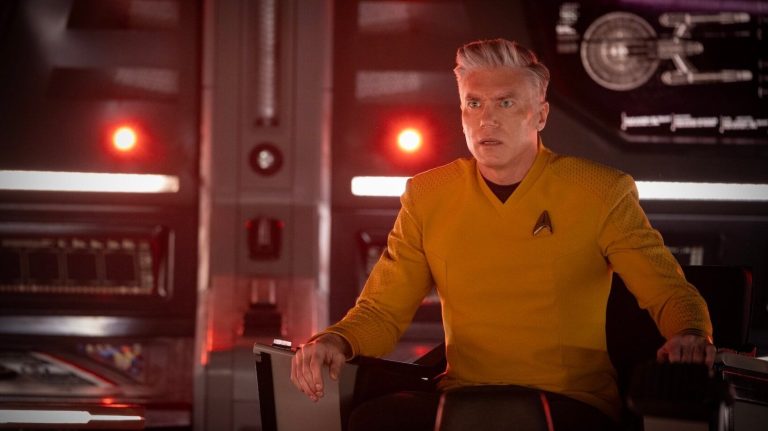
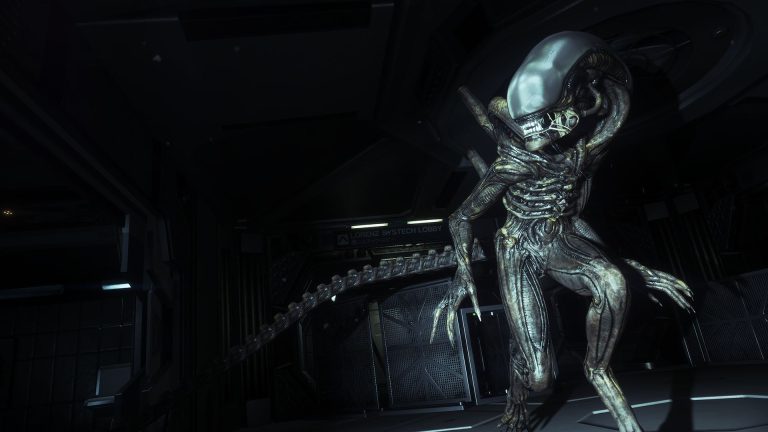
Red Dwarf was radically different from Star Trek. For one thing, it was a sit-com and not a drama. The titular ship Red Dwarf was lived in, to say the least. Lacking the clean aesthetics of the Enterprise, it was more akin to the Nostromo of Alien than anything shown in Star Trek or The Next Generation, which wouldn’t debut on BBC 2 until 1990, three years after it first appeared on U.S. TV.
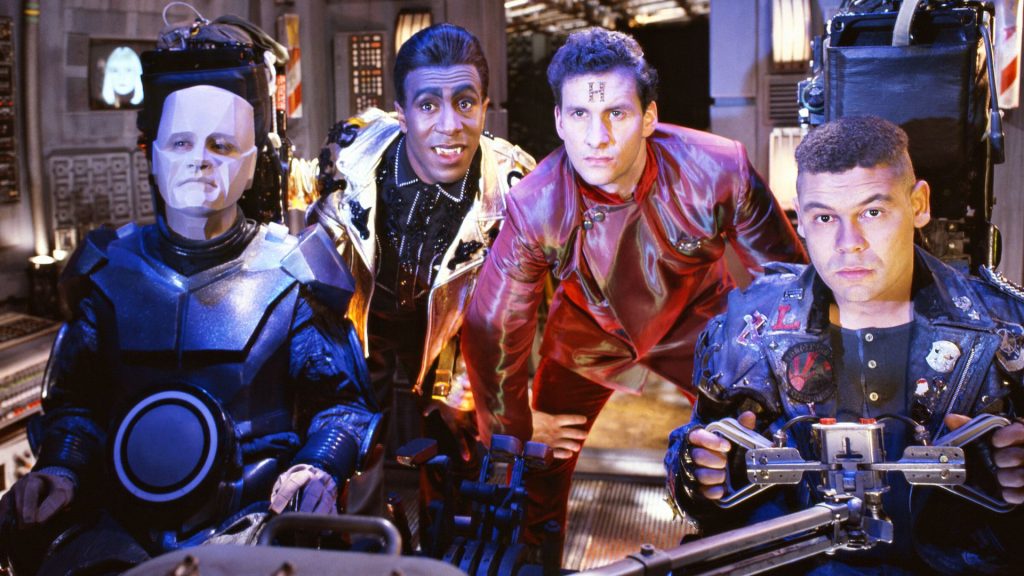
And while Gene Roddenberry’s vision of Star Trek saw a distinct lack of real conflict and animosity between the series regulars, Red Dwarf’s key relationship was the odd couple dynamic between slobbish and laid-back scouse third technician Dave Lister, portrayed by Craig Charles, and the fastidious and priggish low-ranking officer Arnold Rimmer, played by Chris Barrie.

You may be wondering at this stage how Lister and Rimmer could have a relationship at all, given that I just said that Lister was the last human alive. The catch is that Rimmer is a hologram of a dead crew member, hence the “H” he wore on his head for the entire series. He’s also the one responsible for the mess they find themselves in, having inadvertently killed the entire crew of the Red Dwarf (including himself) due to his incompetence.
Lister escaped this fate because he was in stasis at the time of the fatal Rimmer-caused Cadmium II radiation leak — a punishment for sneaking aboard his pregnant cat, Frankenstein. He is awakened after the radiation reaches safe levels by Red Dwarf’s computer, Holly (initially played by the wonderfully poker-faced Norman Lovett). Unfortunately, that process took 3 million years, meaning Lister outlived the crew of Red Dwarf… and the entire human race.
For a kid growing up in a small town outside Liverpool, I knew people like Lister. Folks who shared his love of vindaloo, pool, and, as I got older, cheap lager. Some even had the same reluctance to change their socks. He was a salt-of-the-earth, working-class man plugging away at the bottom rung of the corporate ladder. Nothing exemplified Lister’s existence more than the scene of him painting the outer hull of the gargantuan Red Dwarf as it traverses the void of space at the opening of each episode of seasons one and two.
You can’t scare me, I’m a coward! I’m always scared!

Looking back now, I see Lister as a sort of proto-Peter Quill from Guardians of the Galaxy. An everyday shlub from Earth plunged into outrageous sci-fi situations. Lister even had an unrequited love in the form of Red Dwarf’s navigator Kristine Kochanski, played by Scottish pop-singer Claire Grogan (and then later by Chloë Annett).
Lister was so different from the sci-fi heroes of the time — the Doctor, or Jean Luc Picard, or even Sam Beckett of Quantum Leap — whose resume of skills and talents grew with each passing episode.
Though Lister could be moral and courageous like those characters, I can’t picture any of his contemporaries being forced to eat dog food while stranded on an ice planet. He felt real in a way that his contemporaries never did. I bet the Doctor doesn’t even like vindaloo; he’d probably have gone for the Pot Noodles.

Fortunately, Lister’s decision to smuggle a pregnant cat aboard Red Dwarf means he isn’t completely alone with Rimmer. Descended from Lister’s cat, Frankenstein is Cat (Danny John-Jules), a preening, fashion-conscious, and self-obsessed member of a race of cat-humanoids evolved from Lister’s pet and her offspring.
Cat’s lack of understanding (and common sense) is the jumping-off point for a ton of jokes, but also serves as a great vehicle for exposition, as the other boys from the Dwarf explain events to the loveable fool.
Though I’d enjoyed the second season of Red Dwarf, it was with the third series that my love of the series really began. The first episode of season three really served as a soft reboot for Red Dwarf, long before the term entered common vernacular.
The cliffhanger of the previous season, which saw Lister impregnated by his female self from an alternate universe, is dismissed with a pre-episode text crawl parodying Star Wars, which irreverently moved way too fast to read. The message was clear; forget what went before, Red Dwarf is entering hyperspace.
Infinity welcomes careful drivers

The first change I noticed about Red Dwarf III was that the sombre opening of seasons one and two and the image of Lister doing menial tasks in the depths of space were gone, replaced by an upbeat version of the theme and a montage of action scenes from forthcoming episodes.
Norman Lovett was replaced as Holly by Hattie Hayridge, and the android Kryten, first introduced in the first episode of season two and played by David Ross, returned to join the regulars, albeit now portrayed by Robert Llewellyn. The addition of Kryten, for me at least, provided the element Red Dwarf has missed: a counterpart to Lister and Rimmer.
In fact, they almost serve as the Devil and Angel on Kryten’s shoulders, Rimmer encouraging the android to conform and reminding him of his duty to serve, while Lister urges Kryten to rebel, even, after a great deal of effort, teaching the android to echo his favorite insult, “smeg head.”

Season three is also when Red Dwarf really started to experiment with surprisingly high-concept science fiction to hilarious effect. In one episode, the crew of the Red Dwarf visits an Earth on which time moves backwards, culminating in a slapstick reverse Wild West-style bar fight that sees teeth reappear in mouths, windows reassemble, and chairs unbreak over heads.
Related: Red Dwarf: 10 ways the Brit sci-fi sitcom proved it was as smart as Star Trek
In another, a xenomorph-parodying shapeshifting “emotional vampire” called the Polymorph invades the ship. And in another, the crew time-travels through photographs thanks to mutated developing fluid with Lister and Rimmer trying to change history so they invent the tension sheet, aka some bubble wrap painted red and cut into small squares, that was actually developed by Rimmer’s school classmate Thickee Holden.

The following seasons saw encounters with a robotic adjudicator who judges the crew’s worthiness, Lister’s vindaloo mutated into a DNA-twisted monster, a moon that terraforms according to the psyche of those that set foot on it, and Rimmer transformed into a penguin-puppet-wielding, eye-blast-firing, plaid dress-wearing psychopath.
While mentioned in mere passing, these concepts may just seem like high-concept sci-fi silliness, they allowed the audience, including myself, to explore the psyches of the main characters in ways that weren’t common to sitcoms or to genre TV at the time. However, perhaps the height of Red Dwarf’s experimentation with sci-fi concepts and the exploration of its main protagonists’ morality was the season five finale, Back to Reality.
In a concept that could come straight out of a Rick and Morty episode, Back to Reality sees the crew seemingly discover they have actually been playing a virtual reality or “total immersion” game, and their time on Red Dwarf was a mere illusion.

Not only are they forced to watch other players lead their lives far more successfully than they did (over four years, the regular crew scored a pathetic 4% in Red Dwarf: The Game), but they find their real-world counterparts are the epitomes of everything they hate or fear.
Lister is the rich and ruthless leader of a fascist people force, Rimmer is a bum, Kryten is a detective forced to kill, and Cat is a styleless nerd called Duane Dibbley, a massive hit with my Red Dwarf loving friends and I at the time and the opportunity to actually do something with Cat, arguably the least fleshed member of the Dwarf crew.
The boys are eventually saved from this nightmare by Holly, who reveals they had fallen under the influence of a creature called the Despair Squid while investigating the suicide of the entire crew of a ship called the Esperanto. Everything was back to normal by the end of the episode, but this was anything but a mere bait and switch.

As an impressionable viewer, Back to Reality really made me believe that the whole concept of Red Dwarf was a lie forced on the viewer and the characters themselves. This bold season finale represented a complete change to the status quo, and that just wasn’t something I’d seen in other sci-fi shows. And if it had been the finale episode of the show, what a lingering thought that could have been.
I feel like the closest genre TV has come to replicating this is a 2002 episode of Buffy the Vampire Slayer called “Normal Again,” which suggests Buffy’s life in Sunnydale is a complete fantasy, the result of a psychological break.
Season six of Red Dwarf was also something of a soft reboot. Two hundred years after Back to Reality, we join Lister and the rest on a hunt for the missing Red Dwarf aboard the scuttle-ship Starbug, with Holly now absent. Sadly, this was the last season I could honestly say I loved Red Dwarf.
A major – and I mean major – leaflet campaign

While season six was arguably one of the strongest of Red Dwarf, things begin to feel like something of a rehash, with a little of that original spark of creativity missing. This was no more evident than in “Polymorph II: Emohawk,” the episode that sees the return of the Polymorph, bringing with it a transformation into Duane Dibbley for Cat, and Rimmer becoming his egotistical alter-ego from a parallel universe, Ace Rimmer, originally introduced in season four.
Six was also the season that saw the departure of Rob Grant to pursue other projects. Season seven saw Grant Naylor follow his vision of Red Dwarf as a feature-length movie. The series was digitally altered to appear more movie-like, and the audience laugh-track was removed (though one has been added back in to some episodes on streaming sites.)
Red Dwarf would end its original run at the end of season eight, broadcast in 1999. The charm may have disappeared for the teenage me with the end of season six, but there is no denying the lasting impact of the show.

In fact, it is remarkable that a sci-fi comedy could inspire relaunches in 2009, 2012, 2016, and 2020, along with a multitude of novels and multimedia projects, and even a U.S. version that we probably shouldn’t dwell on. From the humblest beginnings, Grant and Naylor formed a science fiction legacy that has lasted over 30 years, with characters and settings more persistent than a 3-million-year-old vindaloo stain.
As for me, I’m going to grab a tension sheet and take a trip through a time hole back to 1988 to revisit Red Dwarf.
Smoke me a kipper, I’ll be back for breakfast!